Brief Description
the common cold, is a highly contagious, viral infectious disease of the upper respiratory system, primarily caused by picornaviruses or coronaviruses.
Signs and Symptoms
Common symptoms are sore throat, runny nose, nasal congestion, sneezing and cough; sometimes accompanied by 'pink eye', muscle aches, fatigue, malaise, headaches, muscle weakness, and/or loss of appetite. The common cold usually last for about one week, but can last up to 14 days. Symptoms may be more severe in infants and young children. Although the disease is generally mild and self-limiting, patients with common colds often seek professional medical help, use over-the-counter drugs, and may miss school or work days.
Causes
Common colds are most often caused by infection by one of the more than 100 serotypes of rhinovirus, a type of picornavirus. Other viruses causing colds are coronavirus, human parainfluenza viruses, human respiratory syncytial virus, adenoviruses, enteroviruses, or metapneumovirus. Due to the many different types of viruses, it is not possible to gain complete immunity to the common cold
Diagnosis
Usually the doctor will diagnosis the patient with the symptons listed above.
Treatment
No vaccines are available; however, once one has caught one of the many cold viruses, one is immune and may never catch that particular strain again[citation needed]. The primary method to prevent infection is hand-washing to minimize person-to-person transmission of the virus. There are no antiviral drugs approved to treat or cure the infection. Most available medications are palliative and treat symptoms only.
Prevention
As there is no medically proven and accepted medication directly targeting the causative agent, there is no cure for the common cold. Treatment is limited to symptomatic supportive options, maximizing the comfort of the patient, and limiting complications and harmful sequelae. The most reliable treatment is a combination of fluids and plenty of rest.
Epidemiology
Upper respiratory tract infections are the most common infectious diseases among adults, who have two to four respiratory infections annually. Children may have six to ten colds a year (and up to 12 colds a year for school children). In the United States, the incidence of colds is higher in the fall and winter, with most infections occurring between September and April. The seasonality may be due to the start of the school year, or due to people spending more time indoors (thus in closer proximity with each other) increasing the chance of transmission of the virus.
Organ System Affected
upper respiratory system
References
http://en.wikipedia.org/wiki/Common_cold#Epidemiology
Thursday, February 28, 2008

Tuesday, February 5, 2008
Syphilis
Brief Description
Signs and Symptoms
Syphilis is a sexually transmitted
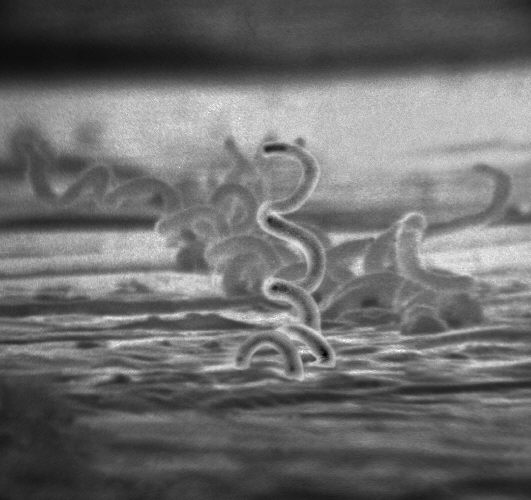
disease (STD) caused by the bacterium Treponema pallidum. It has often been
called “the great imitator” because so many of the signs and symptoms are
indistinguishable from those of other diseases
Signs and Symptoms
Many people infected with syphilis do not have any
symptoms for years, yet remain at risk for late complications if they are not
treated. Although transmission occurs from persons with sores who are in the
primary or secondary stage, many of these sores are unrecognized. Thus,
transmission may occur from persons who are unaware of their
infection.Primary Stage - The primary stage of syphilis is usually marked by the appearance of a single sore (called a chancre), but there may be multiple sores. The time between infection with syphilis and the start of the first symptom can range from 10 to 90 days (average 21 days). The chancre is usually firm, round, small, and painless. It appears at the spot where syphilis entered the body. The chancre lasts 3 to 6 weeks, and it heals without treatment. However, if adequate treatment is not administered, the infection progresses to the secondary stage.
Secondary Stage - Skin rash and mucous membrane lesions characterize the secondary stage. This stage typically starts with the development of a rash on one or more areas of the body. The rash usually does not cause itching. Rashes associated with secondary syphilis can appear as the chancre is healing or several weeks after the chancre has healed. The characteristic rash of secondary syphilis may appear as rough, red, or reddish brown spots both on the palms of the hands and the bottoms of the feet. However, rashes with a different appearance may occur on other parts of the body, sometimes resembling rashes caused by other diseases. Sometimes rashes associated with secondary syphilis are so faint that they are not noticed. In addition to rashes, symptoms of secondary syphilis may include fever, swollen lymph glands, sore throat, patchy hair loss, headaches, weight loss, muscle aches, and fatigue. The signs and symptoms of secondary syphilis will resolve with or without treatment, but without treatment, the infection will progress to the latent and possibly late stages of disease.
Late Stage - The latent (hidden) stage of syphilis begins when primary and secondary symptoms disappear. Without treatment, the infected person will continue to have syphilis even though there are no signs or symptoms; infection remains in the body. This latent stage can last for years. The late stages of syphilis can develop in about 15% of people who have not been treated for syphilis, and can appear 10 – 20 years after infection was first acquired. In the late stages of syphilis, the disease may subsequently damage the internal organs, including the brain, nerves, eyes, heart, blood vessels, liver, bones, and joints. Signs and symptoms of the late stage of syphilis include difficulty coordinating muscle movements, paralysis, numbness, gradual blindness, and dementia. This damage may be serious enough to cause death.Causes
Syphilis is passed from person to person through direct contact with a syphilis sore. Sores occur mainly on the external genitals, vagina, anus, or in the rectum. Sores also can occur on the lips and in the mouth. Transmission of the organism occurs during vaginal, anal, or oral sex. Pregnant women with the disease can pass it to the babies they are carrying. Syphilis cannot be spread through contact with toilet seats, doorknobs, swimming pools, hot tubs, bathtubs, shared clothing, or eating utensils.
Diagnosis
Some health care providers can diagnose syphilis by examining material from a chancre (infectious sore) using a special microscope called a dark-field microscope. If syphilis bacteria are present in the sore, they will show up when observed through the microscope.
A blood test is another way to determine whether someone has syphilis. Shortly after infection occurs, the body produces syphilis antibodies that can be detected by an accurate, safe, and inexpensive blood test.Treatment
Syphilis is easy to cure in its early stages. A single intramuscular injection of penicillin, an antibiotic, will cure a person who has had syphilis for less than a year. Additional doses are needed to treat someone who has had syphilis for longer than a year. For people who are allergic to penicillin, other antibiotics are available to treat syphilis. There are no home remedies or over-the-counter drugs that will cure syphilis. Treatment will kill the syphilis bacterium and prevent further damage, but it will not repair damage already done.
Prevention
The surest way to avoid transmission of sexually transmitted diseases, including syphilis, is to abstain from sexual contact or to be in a long-term mutually monogamous relationship with a partner who has been tested and is known to be uninfected. Avoiding alcohol and drug use may also help prevent transmission of syphilis because these activities may lead to risky sexual behavior. It is important that sex partners talk to each other about their HIV status and history of other STDs so that preventive action can be taken.
Epidemiology
In 2006, half of all P&S syphilis cases were reported from 20 counties and 2 cities; and most P&S syphilis cases occurred in persons 20 to 39 years of age. The incidence of P&S syphilis was highest in women 20 to 24 years of age and in men 35 to 39 years of age.
Organ System Affected
severe damage to one or more organ systems in the body including the brain and nervous system; heart and circulatory system; and destructive lesions (gummas) in the skin, bones, brain, or internal organs.References
http://www.irc-wisconsin.org/syphilis.htmhttp://www.cdc.gov/STD/Syphilis/STDFact-Syphilis.htm
http://upload.wikimedia.org/wikipedia/commons/2/29/Treponema_pallidum.jpg
Subscribe to:
Posts (Atom)