Monday, April 7, 2008

Hypertension


Brief Description

Blood pressure is the pressure your blood exerts against your blood vessel walls as your heart pumps. Blood pressure rises with each heartbeat and falls when the heart relaxes between beats, but there is always a certain amount of pressure in the arteries. That blood pressure comes from two physical forces. The heart creates one force as it pumps blood into the arteries and through the circulatory system. The other force comes from the arteries resisting the blood flow.


Signs and Symptoms

headaches, dizzy spells or a few more nosebleeds than normal


Causes


"In 90 percent to 95 percent of high blood pressure
cases, the American Heart Association says there's no identifiable cause. This
type of high blood pressure, called essential hypertension or primary
hypertension, tends to develop gradually over many years.
The other 5 percent
to 10 percent of high blood pressure cases are caused by an underlying
condition. This type of high blood pressure, called secondary hypertension,
tends to appear suddenly and cause higher blood pressure than does primary
hypertension. Various conditions can lead to secondary hypertension, including
kidney abnormalities, tumors of the adrenal gland or certain congenital heart
defects.
Certain medications — including birth control pills, cold remedies,
decongestants, over-the-counter pain relievers and some prescription drugs —
also may cause secondary hypertension. In a 2005 study, women who took an
average of 500 milligrams or more of acetaminophen (Tylenol, others) daily over
several years were more likely to develop high blood pressure than were women
who didn't take any acetaminophen. It's not known if the same holds true for
men."


Diagnosis


Doctors use a blood pressure cuff to measure your blood pressure. If it is high they will monitor it for awhile and will check your blood pressure regularly. If it stays at a high rate, they will diagnos you and take further steps to reducing it.


Treatment


You can get treated by a doctor using prescribe pills. Most of the time though, by changing your exercise habits and watching what you eat. A diet with low sodium is usually preferred and get the best results in lowering blood pressure.


Prevention


Eat healthy foods- Try the Dietary Approaches to Stop Hypertension (DASH) diet, which emphasizes fruits, vegetables, whole grains and low-fat dairy foods. Get plenty of potassium, which can help prevent and control high blood pressure. Eat less saturated fat and total fat. Limit the amount of sodium in your diet. Although 2,400 milligrams (mg) of sodium a day is the current limit for otherwise healthy adults, limiting sodium intake to 1,500 mg a day will have a more dramatic effect on your blood pressure.
Maintain a healthy weight- If you're overweight, losing even 5 pounds can lower your blood pressure.
Increase physical activity- Regular physical activity can help lower your blood pressure and keep your weight under control. Strive for at least 30 minutes of physical activity a day.
Limit alcohol- Even if you're healthy, alcohol can raise your blood pressure. If you choose to drink alcohol, do so in moderation — up to one drink a day for women, two drinks a day for men.
Don't smoke- Tobacco injures blood vessel walls and speeds up the process of hardening of the arteries. If you smoke, ask your doctor to help you quit.
Manage stress- Reduce stress as much as possible. Practice healthy coping techniques, such as muscle relaxation and deep breathing. Getting plenty of sleep can help, too.
Practice slow, deep breathing- Do it on your own or try device-guided paced breathing. In various clinical trials, regular use of Resperate — an over-the-counter device approved by the Food and Drug Administration to analyze breathing patterns and help guide inhalation and exhalation — significantly lowered blood pressure.


Epidemiology

The race with the most people affected by high blood pressure is the caucasians. The next after that are the African Americans and the Mexicans. Although Native Americans have a lower rate that those nation wide, the amount of people who make up the Native American population is less than those of the other races and is therefore really high in their race only.


Organ System Affected

The Cardiovascular System is affected by this disease.

References


http://www.mayoclinic.com/health/high-blood-pressure/DS00100/DSECTION=2


http://www.wikipedia.com/


http://en.wikipedia.org/wiki/Hypertension#Epidemiology


www.nature.com/jhh/journal/v20/n2/full/1001958a.html


Monday, March 10, 2008

Cirrhosis

Brief Description


The liver, the largest organ in the body, is essential in keeping the body functioning properly. It removes or neutralizes poisons from the blood, produces immune agents to control infection, and removes germs and bacteria from the blood. It makes proteins that regulate blood clotting and produces bile to help absorb fats and fat-soluble vitamins. You cannot live without a functioning liver.
In cirrhosis of the liver, scar tissue replaces normal, healthy tissue, blocking the flow of blood through the organ and preventing it from working as it should. Cirrhosis is the twelfth leading cause of death by disease, killing about 26,000 people each year. Also, the cost of cirrhosis in terms of human suffering, hospital costs, and lost productivity is high.


Sings and Symptoms

Many people with cirrhosis have no symptoms in the early stages of the disease. However, as scar tissue replaces healthy cells, liver function starts to fail and a person may experience the following symptoms:
exhaustion
fatigue
loss of appetite
nausea
weakness
weight loss
abdominal pain
spider-like blood vessels (spider angiomas) that develop on the skin
As the disease progresses, complications may develop. In some people, these may be the first signs of the disease.


Causes

Cirrhosis has many causes. In the United States, chronic alcoholism and hepatitis C are the most common ones.
Alcoholic liver disease. To many people, cirrhosis of the liver is synonymous with chronic alcoholism, but in fact, alcoholism is only one of the causes. Alcoholic cirrhosis usually develops after more than a decade of heavy drinking. The amount of alcohol that can injure the liver varies greatly from person to person. In women, as few as two to three drinks per day have been linked with cirrhosis and in men, as few as three to four drinks per day. Alcohol seems to injure the liver by blocking the normal metabolism of protein, fats, and carbohydrates.


Diagnosis

The doctor may diagnose cirrhosis on the basis of symptoms, laboratory tests, the medical history, and a physical examination. For example, during a physical examination, the doctor may notice that the liver feels harder or larger than usual and order blood tests that can show whether liver disease is present.

Treatment

Liver damage from cirrhosis cannot be reversed, but treatment can stop or delay further progression and reduce complications. Treatment depends on the cause of cirrhosis and any complications a person is experiencing. For example, cirrhosis caused by alcohol abuse is treated by abstaining from alcohol. Treatment for hepatitis-related cirrhosis involves medications used to treat the different types of hepatitis, such as interferon for viral hepatitis and corticosteroids for autoimmune hepatitis. Cirrhosis caused by Wilson disease, in which copper builds up in organs, is treated with medications to remove the copper. These are just a few examples—treatment for cirrhosis resulting from other diseases depends on the underlying cause. In all cases, regardless of the cause, following a healthy diet and avoiding alcohol are essential because the body needs all the nutrients it can get, and alcohol will only lead to more liver damage. Light physical activity can help stop or delay cirrhosis as well.

Prevention

Stay away from alcohol!!!

Organ system Affected

The Liver

References

http://digestive.niddk.nih.gov/ddiseases/pubs/cirrhosis/, prevention referenced by: LaToya Brave Heart


Thursday, February 28, 2008

Commom Cold

Brief Description

the common cold, is a highly contagious, viral infectious disease of the upper respiratory system, primarily caused by picornaviruses or coronaviruses.


Signs and Symptoms

Common symptoms are sore throat, runny nose, nasal congestion, sneezing and cough; sometimes accompanied by 'pink eye', muscle aches, fatigue, malaise, headaches, muscle weakness, and/or loss of appetite. The common cold usually last for about one week, but can last up to 14 days. Symptoms may be more severe in infants and young children. Although the disease is generally mild and self-limiting, patients with common colds often seek professional medical help, use over-the-counter drugs, and may miss school or work days.

Causes

Common colds are most often caused by infection by one of the more than 100 serotypes of rhinovirus, a type of picornavirus. Other viruses causing colds are coronavirus, human parainfluenza viruses, human respiratory syncytial virus, adenoviruses, enteroviruses, or metapneumovirus. Due to the many different types of viruses, it is not possible to gain complete immunity to the common cold

Diagnosis

Usually the doctor will diagnosis the patient with the symptons listed above.

Treatment

No vaccines are available; however, once one has caught one of the many cold viruses, one is immune and may never catch that particular strain again[citation needed]. The primary method to prevent infection is hand-washing to minimize person-to-person transmission of the virus. There are no antiviral drugs approved to treat or cure the infection. Most available medications are palliative and treat symptoms only.

Prevention

As there is no medically proven and accepted medication directly targeting the causative agent, there is no cure for the common cold. Treatment is limited to symptomatic supportive options, maximizing the comfort of the patient, and limiting complications and harmful sequelae. The most reliable treatment is a combination of fluids and plenty of rest.

Epidemiology

Upper respiratory tract infections are the most common infectious diseases among adults, who have two to four respiratory infections annually. Children may have six to ten colds a year (and up to 12 colds a year for school children). In the United States, the incidence of colds is higher in the fall and winter, with most infections occurring between September and April. The seasonality may be due to the start of the school year, or due to people spending more time indoors (thus in closer proximity with each other) increasing the chance of transmission of the virus.

Organ System Affected

upper respiratory system

References

http://en.wikipedia.org/wiki/Common_cold#Epidemiology

Tuesday, February 5, 2008

Syphilis


Brief Description


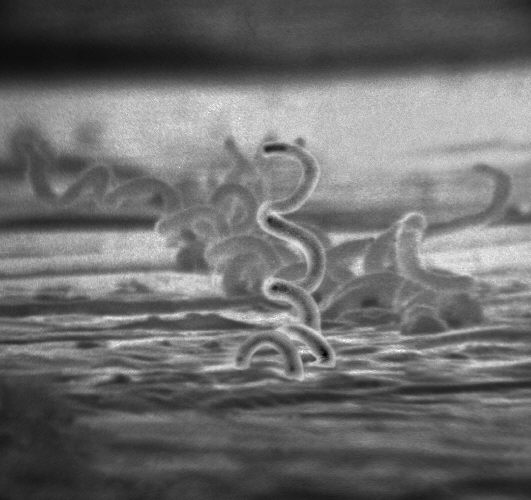
Syphilis is a sexually transmitted
disease (STD) caused by the bacterium Treponema pallidum. It has often been
called “the great imitator” because so many of the signs and symptoms are
indistinguishable from those of other diseases
Signs and Symptoms


Many people infected with syphilis do not have any
symptoms for years, yet remain at risk for late complications if they are not
treated. Although transmission occurs from persons with sores who are in the
primary or secondary stage, many of these sores are unrecognized. Thus,
transmission may occur from persons who are unaware of their
infection.


Primary Stage - The primary stage of syphilis is usually marked by the appearance of a single sore (called a chancre), but there may be multiple sores. The time between infection with syphilis and the start of the first symptom can range from 10 to 90 days (average 21 days). The chancre is usually firm, round, small, and painless. It appears at the spot where syphilis entered the body. The chancre lasts 3 to 6 weeks, and it heals without treatment. However, if adequate treatment is not administered, the infection progresses to the secondary stage.


Secondary Stage - Skin rash and mucous membrane lesions characterize the secondary stage. This stage typically starts with the development of a rash on one or more areas of the body. The rash usually does not cause itching. Rashes associated with secondary syphilis can appear as the chancre is healing or several weeks after the chancre has healed. The characteristic rash of secondary syphilis may appear as rough, red, or reddish brown spots both on the palms of the hands and the bottoms of the feet. However, rashes with a different appearance may occur on other parts of the body, sometimes resembling rashes caused by other diseases. Sometimes rashes associated with secondary syphilis are so faint that they are not noticed. In addition to rashes, symptoms of secondary syphilis may include fever, swollen lymph glands, sore throat, patchy hair loss, headaches, weight loss, muscle aches, and fatigue. The signs and symptoms of secondary syphilis will resolve with or without treatment, but without treatment, the infection will progress to the latent and possibly late stages of disease.


Late Stage - The latent (hidden) stage of syphilis begins when primary and secondary symptoms disappear. Without treatment, the infected person will continue to have syphilis even though there are no signs or symptoms; infection remains in the body. This latent stage can last for years. The late stages of syphilis can develop in about 15% of people who have not been treated for syphilis, and can appear 10 – 20 years after infection was first acquired. In the late stages of syphilis, the disease may subsequently damage the internal organs, including the brain, nerves, eyes, heart, blood vessels, liver, bones, and joints. Signs and symptoms of the late stage of syphilis include difficulty coordinating muscle movements, paralysis, numbness, gradual blindness, and dementia. This damage may be serious enough to cause death.


Causes


Syphilis is passed from person to person through direct contact with a syphilis sore. Sores occur mainly on the external genitals, vagina, anus, or in the rectum. Sores also can occur on the lips and in the mouth. Transmission of the organism occurs during vaginal, anal, or oral sex. Pregnant women with the disease can pass it to the babies they are carrying. Syphilis cannot be spread through contact with toilet seats, doorknobs, swimming pools, hot tubs, bathtubs, shared clothing, or eating utensils.


Diagnosis


Some health care providers can diagnose syphilis by examining material from a chancre (infectious sore) using a special microscope called a dark-field microscope. If syphilis bacteria are present in the sore, they will show up when observed through the microscope.
A blood test is another way to determine whether someone has syphilis. Shortly after infection occurs, the body produces syphilis antibodies that can be detected by an accurate, safe, and inexpensive blood test.


Treatment


Syphilis is easy to cure in its early stages. A single intramuscular injection of penicillin, an antibiotic, will cure a person who has had syphilis for less than a year. Additional doses are needed to treat someone who has had syphilis for longer than a year. For people who are allergic to penicillin, other antibiotics are available to treat syphilis. There are no home remedies or over-the-counter drugs that will cure syphilis. Treatment will kill the syphilis bacterium and prevent further damage, but it will not repair damage already done.


Prevention


The surest way to avoid transmission of sexually transmitted diseases, including syphilis, is to abstain from sexual contact or to be in a long-term mutually monogamous relationship with a partner who has been tested and is known to be uninfected. Avoiding alcohol and drug use may also help prevent transmission of syphilis because these activities may lead to risky sexual behavior. It is important that sex partners talk to each other about their HIV status and history of other STDs so that preventive action can be taken.


Epidemiology


In 2006, half of all P&S syphilis cases were reported from 20 counties and 2 cities; and most P&S syphilis cases occurred in persons 20 to 39 years of age. The incidence of P&S syphilis was highest in women 20 to 24 years of age and in men 35 to 39 years of age.


Organ System Affected

severe damage to one or more organ systems in the body including the brain and nervous system; heart and circulatory system; and destructive lesions (gummas) in the skin, bones, brain, or internal organs.

References

http://www.irc-wisconsin.org/syphilis.htm

http://www.cdc.gov/STD/Syphilis/STDFact-Syphilis.htm

http://upload.wikimedia.org/wikipedia/commons/2/29/Treponema_pallidum.jpg

Tuesday, January 15, 2008

What is a disease?

A disease is an abnormal condition of an organism that impairs bodily functions all over.[citation needed] In human beings, "disease" is often used more broadly to refer to any condition that causes discomfort, dysfunction, distress, social problems, and/or death to the person afflicted, or similar problems for those in contact with the person. In this broader sense, it sometimes includes injuries, disabilities, disorders, syndromes, infections, isolated symptoms, deviant behaviors, and atypical variations of structure and function, while in other contexts and for other purposes these may be considered distinguishable categories.A disease is an abnormal condition of an organism that impairs bodily functions all over.[citation needed] In human beings, "disease" is often used more broadly to refer to any condition that causes discomfort, dysfunction, distress, social problems, and/or death to the person afflicted, or similar problems for those in contact with the person. In this broader sense, it sometimes includes injuries, disabilities, disorders, syndromes, infections, isolated symptoms, deviant behaviors, and atypical variations of structure and function, while in other contexts and for other purposes these may be considered distinguishable categories.

After reading this definition I found out that a injury is also considered a disease, which I did not know. I always thought of a disease as a STD of some sort but not only that. Stuff like people who are disabled or metally ill.

http://en.wikipedia.org/wiki/Disease